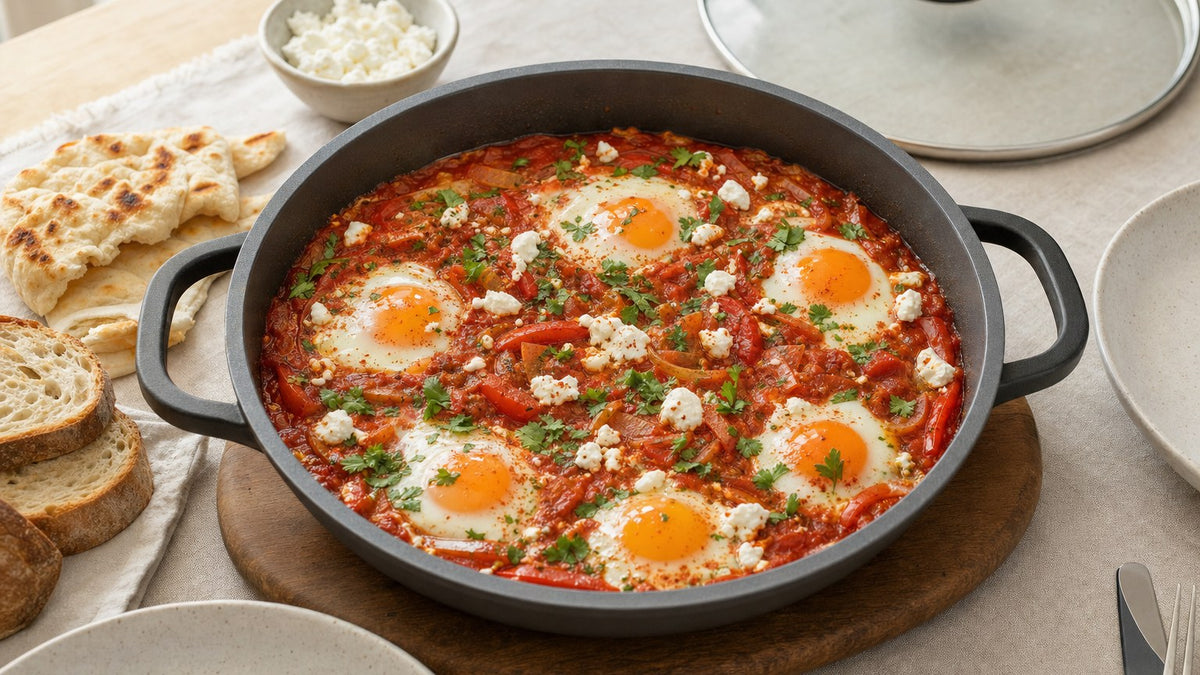
Shakshuka is eggs gently poached in a thick, spiced sauce of tomatoes, sweet peppers and onion, cooked and served in the same pan. Born in North Africa, it is now a brunch favourite far beyond it, and just as good as a quick supper. This shakshuka recipe serves 4 with 6 eggs and takes about 40 minutes from chopping board to table. It works because the sauce does the hard work: once it has simmered down until rich and jammy, it holds the eggs in place and cooks them softly under a lid, so you get set whites, runny yolks and a pan of sauce that begs to be mopped up with bread.
| Preparation | 10 minutes |
|---|---|
| Cooking | 30 minutes |
| Total | about 40 minutes |
| Servings | 4 servings (6 eggs) |
| Difficulty | Easy |
| What you need | A 26–28 cm sauté pan or deep frying pan with a lid, a chopping board, a sharp knife, a wooden spoon, a small cup for cracking the eggs |
Ingredients
- 3 tbsp olive oil
- 1 large onion, thinly sliced
- 2 red peppers, deseeded and cut into thin strips
- 3 garlic cloves, thinly sliced
- 1½ tsp ground cumin
- 2 tsp sweet paprika
- ½ tsp chilli flakes, or 1–2 tsp harissa paste
- 1 tbsp tomato purée
- 2 tins (400 g each) chopped tomatoes
- 1 tsp salt, plus a pinch for the eggs
- freshly ground black pepper
- 1 tsp sugar (only if the tomatoes taste sharp)
- 6 eggs
- 80 g feta, crumbled (optional)
- a small handful of fresh coriander or flat-leaf parsley, chopped
- crusty bread, pitta or flatbread, to serve
How to make shakshuka
- Soften the onion and peppers. Heat the olive oil in a 26–28 cm sauté pan over a medium heat. Add the onion and peppers with a pinch of the salt and cook for about 10 minutes, stirring now and then, until they are soft and sweet and only lightly coloured at the edges.
- Add the garlic and spices. Stir in the garlic, cumin, paprika and chilli flakes or harissa and cook for 1 minute, until the garlic smells fragrant. Keep the heat moderate so the spices toast without burning.
- Simmer the sauce. Stir in the tomato purée, then add the chopped tomatoes, the rest of the salt and a good grind of black pepper. Bring to a gentle simmer and cook uncovered for 10–15 minutes, stirring occasionally, until the sauce is thick enough that a spoon dragged through it leaves a clear trail. Taste and add the sugar only if the tomatoes are sharp.
- Make wells for the eggs. Turn the heat down to low. Use the back of a spoon to make 6 small hollows in the sauce, spaced evenly around the pan. Crack an egg into each hollow (cracking each one into a cup first makes this easier) and sprinkle a little salt over the eggs.
- Cover and cook the eggs. Put the lid on and cook over a low heat for 6–8 minutes, until the whites are completely set and the yolks are still soft. Check through the lid or lift it after 5 minutes; if the whites around the yolks still look clear, give them another minute or two.
- Finish and serve. Take the pan off the heat, scatter over the feta, if using, and the chopped herbs. Bring the pan straight to the table and serve with plenty of bread for dipping into the sauce and the runny yolks.
What to cook shakshuka in
Shakshuka is a true one-pan dish, so the pan matters. You need three things: enough width for six eggs to sit apart in the sauce, sides deep enough to hold two tins of tomatoes without splashing, and a lid, because covering the pan is what lets the tops of the eggs set while the yolks stay soft. A wide sauté pan of 26–28 cm ticks all three boxes. A regular frying pan works too if it is deep and you have a lid that fits, although the sauce will be shallower and the eggs will cook a little faster. Browse our sauté pans and the pans we have picked out for eggs and omelettes.
A 28 cm sauté pan for the full recipe
The Stone+ Non-stick Covered 2-Handle Sauté Pan 28 cm holds 4.7 litres and is 8.5 cm deep on the inside, so the sauce and six eggs fit comfortably. Its glass lid lets you watch the egg whites turn from clear to white without lifting it and losing the steam, and the two handles make it easy to carry the pan straight to the table. The body is recycled cast aluminium that heats quickly and evenly on all hobs, including induction, and the CeraGreen ceramic non-stick coating, PFAS-free according to the manufacturer, means the eggs slide out cleanly when you serve. The manufacturer recommends washing it by hand.
A 26 cm pan for a smaller batch
If you usually cook for two, halve the recipe and use a smaller pan so the sauce stays deep enough around the eggs. The Balance Non-stick Covered Sauté Pan 26 cm, Sage holds 2.9 litres, is suitable for all hobs, including induction, and has a clear glass lid and a stay-cool handle. Like the Stone+ pan, it has a CeraGreen non-stick coating that is PFAS-free according to the manufacturer.
Not sure whether a sauté pan or a frying pan suits the way you cook? Our guide Sauté pan or frying pan: what's the difference? explains when each one makes sense. And if you are filling gaps in the kitchen anyway, our frying pan sets give you several everyday sizes in one go.
Tips and common mistakes
- Watery sauce. The most common mistake is adding the eggs too early. If the sauce is still runny, the eggs spread out, sink and turn out pale and watery. Give it the full simmer until it is thick and glossy.
- Overcooked yolks. Eggs keep cooking in the hot sauce after you turn off the heat. Take the pan off the hob as soon as the whites are set and the yolks still wobble.
- Runny whites around the yolk. The white closest to the yolk sets last. Spoon a little of the hot sauce over the whites (not the yolks) before you put the lid on, and keep the lid closed.
- Bitter, scorched spices. Cumin and paprika burn quickly. Add them with the garlic only once the onions and peppers are soft, and cook them for just a minute before the tomatoes go in.
- Bland result. Taste the sauce before the eggs go in, because this is your last chance to season it properly.
Variations
Green shakshuka
Leave out the tomatoes and peppers. Soften a sliced leek and a courgette in the oil, wilt 200 g spinach with the garlic and cumin, add a splash of cream or a few spoonfuls of Greek yoghurt, then cook the eggs on top and finish with feta and dill.
Spicier shakshuka
Use 2 tsp harissa instead of chilli flakes, add a finely chopped fresh red chilli with the garlic and serve with a spoonful of yoghurt to cool it down.
Heartier shakshuka
Brown 150 g sliced chorizo or spicy sausage before the onions, or stir a drained 400 g tin of chickpeas or white beans into the sauce while it simmers.
What to serve with shakshuka
Bread is not optional here: a crusty sourdough, warm pitta or soft flatbread is how you eat the sauce. A bowl of thick yoghurt, a simple cucumber and tomato salad and a few olives turn it into a generous weekend brunch. If you are cooking for a crowd, our fluffy American pancakes make a sweet second course. And if you like dishes that simmer in one wide pan, try our chili con carne or a rich butter chicken.
Shakshuka FAQ
Should you cover shakshuka while the eggs cook?
Yes. A lid traps the steam, which cooks the tops of the eggs while the bottoms sit in the sauce. Without one, the yolks overcook before the whites on top have set. A glass lid lets you see when they are done.
How do I know when the eggs are done?
The whites should be completely opaque, with no clear, jelly-like patches around the yolk, and the yolks should still move when you gently shake the pan. That usually takes 6–8 minutes over a low heat. For firmer yolks, give them 2–3 minutes more.
Is shakshuka the same as chakchouka?
Yes. Chakchouka is the French-style spelling used in the Maghreb (Tunisia, Algeria and Morocco), while shakshuka is the spelling most English speakers know.
Can I make shakshuka ahead?
The sauce, yes; the eggs, no. Make the sauce up to two days ahead and keep it in the fridge. When you want to eat, warm it in the pan until it bubbles gently, then add the eggs and cook them fresh.
The photo is illustrative (created with AI).